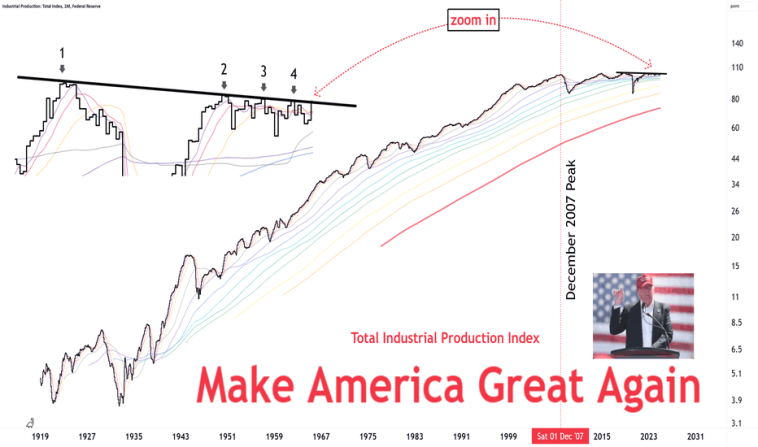

Fed’s Annual Revisions: A Closer Look into U.S. Industrial Production Trends
The Federal Reserve’s recent annual revisions to its data on U.S. industrial production and capacity use have sparked a lively debate among economists, business owners, and policy makers alike. In the latest update, the headline figure for total industrial output in August was adjusted to -0.1 percent. Although on the surface this might seem like a mere calibration of numbers, the implications stretch far beyond raw percentages, impacting how we understand industrial performance, manufacturing resilience, and the broader economic landscape.
In this editorial, we take a closer look at the tricky parts of interpreting revised industrial data, the tangled issues surrounding capacity use, and the subtle details behind the numbers. We also explore how these revisions fit into a larger narrative that touches on manufacturing trends, economic policy, and the way we evaluate industrial performance in a changing business environment.
Understanding Revised U.S. Industrial Production Data
When the Federal Reserve issues its annual revised estimates, it is not just adjusting a number on a chart—it is offering a refined glimpse into the state of America’s industries. Revisions such as these are significant because they attempt to strip away some of the initial guesswork that accompanies early data estimates.
The recent revision, which adjusted the industrial output for August to -0.1 percent, might raise several questions: What does this adjustment mean for industrial activity? Are the initial estimates inadequate, or is the revised measure painting a clearer picture of economic performance? To answer these questions, it is essential to consider both the production figures and the associated capacity use data.
For instance, if one peers into the data, they will note that the manufacturing sector, a key component of overall industrial activity, recorded a modest change. With a production index mean hovering around 101.3 and percentage changes that suggest very slight movements, it is clear that the manufacturing segment remains on a cautious course. This is a reflection of the ongoing balancing act that companies face amid fluctuating demand, supply chain issues, and other challenging bits that arise from the dynamic U.S. economic environment.
Examining Capacity Utilization: The Backbone of Industrial Output
Beyond the raw production indices, capacity utilization figures offer valuable insights into the health of an industry. In the recent report, capacity use rates for total industry hovered near 75.8 percent, with manufacturing presenting a similar profile. These numbers represent the percentage of total potential industrial output that is actually being used at any given time.
Why is capacity utilization so critical? Capacity use data essentially tell us how efficiently industries are operating. When capacity utilization is too low, it may signal that firms are holding back investments or consumer demand is languishing. Conversely, too high a capacity usage rate can hint at overheating, where industries might struggle to meet burgeoning demand without risking quality or operational breakdowns.
For business owners, the connection between production changes and capacity utilization is key. This link offers a fine-grained look into both short-term performance metrics and longer-term trends that help predict how companies might react to economic pressures. The revised data, when interpreted with care, suggest that while there are subtle shifts in capacity usage, these shifts carry implications that are loaded with potential outcomes for the economy.
| Indicator | Previous Estimate | Revised Estimate | Annual Change (Aug ’25/’24) |
|---|---|---|---|
| Total Industrial Output (Pct Change) | -0.1% | -0.1% | 0.8% |
| Manufacturing Output (Pct Change) | 0.1% | 0.1% | 1.0% |
| Total Capacity Use | 75.8% | 75.8% | 76.3% |
| Manufacturing Capacity Use | 75.6% | 75.6% | 75.6% |
This table provides a brief visual summary of the key figures. However, beyond the numbers lies a deeper discussion about the efficiency and health of our industrial base.
Shifting Gears: The Broader Economic Implications
The adjustments to industrial production figures are not isolated data points but part of a larger mosaic that influences economic policy, financial markets, and small business decisions. When production figures are revised downward or show signs of sluggish growth, it often triggers a series of questions: How will this affect monetary policy? What are the potential knock-on effects on employment, consumer spending, and long-term investment?
One reason to study these figures carefully is that they have real-world implications for decision makers. For instance, business owners in industrial manufacturing must factor in these revisions when planning production levels or evaluating the need for investment in new technologies. Meanwhile, policymakers weigh such data against other economic indicators to decide whether adjustments in fiscal strategy are needed.
It is also important to remember that the revised figures must contend with many confusing bits in the data collection process. From supply chain disruptions to unpredictable shifts in demand, multiple factors contribute to these revisions. Even the manufacturing sector, which is often viewed as a bellwether for broader economic health, is experiencing off-putting challenges that complicate an otherwise straightforward interpretation of industrial output statistics.
The Role of the Federal Reserve: Balancing Act in a Complex Environment
As the primary guardian of economic stability in the United States, the Federal Reserve plays a key part in moderating the twists and turns inherent in industrial data. The Fed’s decision to release annual revisions—in this case, adjusting figures back to as far as 1972 through August 2025—underscores the importance of historical context when interpreting current data.
The revision process allows economists and policymakers to re-examine past data with fresh insights, ensuring that trends are analyzed in a manner that accommodates evolving economic conditions. This is particularly important in an industrial environment where marketing, supply chain management, and trade policies continuously shape the trends over time. By updating these figures, the Fed helps make sense of complicated pieces in the current data, though the process itself might always be a bit nerve-racking for market watchers who prefer stable numbers.
For those who work in or study economics, the fine points of these adjustments serve as a reminder of the continuous need to get into the data, even if that means occasionally poking around the numbers to uncover hidden complexities that weren’t immediately obvious in preliminary reports.
Unpacking the Subtle Details Behind Manufacturing Numbers
Delving deeper into manufacturing specifically, the recent figures reveal subtle shifts that might be easily overlooked if one relies solely on headline news. For example, while the overall industrial output shows a slight contraction, the manufacturing sector appears to register modest growth. This disparity can be explained by several factors, including differences in sector-specific demand, technological advancements in production, and varying impacts of global supply chain issues.
Small and medium-sized enterprises (SMEs) in manufacturing often have to find their way around these trends by diversifying product lines, investing in efficiency improvements, or searching for new markets. The updated figures highlight the importance of looking at the small distinctions within the data to find actionable insights. In practice, the manufacturing sector is constantly managing its way through a host of off-putting challenges—from fluctuating material costs to shifts in consumer trends—yet it continues to serve as a backbone for the U.S. economy.
- Technological Upgrades: Factories are increasingly using automation and advanced robotics to improve production rates.
- Supply Chain Adjustments: Companies are reconfiguring their logistics to mitigate the impact of disruptions.
- Market Diversification: Manufacturers are exploring new markets to offset domestic uncertainties.
- Workforce Training: Enhanced skills training programs are vital for navigating the complicated pieces of modern manufacturing.
Each of these elements offers a glimpse into how the manufacturing landscape is adapting to the ever-changing economic conditions, influenced in no small part by the updated industrial numbers.
Implications for Small Businesses in the Industrial Sector
Small businesses play a pivotal role in the industrial landscape, often serving as the agile operators that can respond rapidly to shifts in production trends. The revised figures have particular significance for these businesses, which may have less cushion against abrupt market movements compared to larger corporations.
For many small industrial firms, the revised output data provides a clearer signal of the market environment. These signals can indicate whether to ramp up production, invest in new technology, or hold off on expansion plans. In many cases, it is a matter of patiently figuring a path through a market that is periodically littered with nerve-racking data revisions and off-putting economic indicators.
Small business leaders are advised to consider the following when assessing revised industrial data:
- Monitor Trends Over Time: Instead of overreacting to a single monthly change, watch for longer-term trends that indicate a steady move in one direction.
- Focus on Sector-specific Data: Analyze details specific to your industry segment, as the overall industrial output might mask subtle differences within sectors.
- Consider Capacity Utilization: Use capacity usage rates as a guide to gauge whether the industry is underutilized or stretched to its limits.
- Budget for Flexibility: Understand that revisions can lead to changes in forecasts and, therefore, maintain a buffer in your operational and financial planning.
Such strategies allow small business owners to adopt a hands-on approach to managing growth and risk, benefiting from a more informed perspective on major economic updates like the Fed’s recalibrated industrial output numbers.
Industrial Production and the Future of Economic Policy
The interplay between industrial production data and economic policy is a subject that continues to captivate both policymakers and market participants. Once revised data becomes part of the historical record, it influences how future forecasts are prepared and how policies are crafted. For instance, if the revisions consistently show a lag in production relative to capacity, lawmakers might consider initiatives designed to stimulate investment in technology or in workforce development.
Moreover, national policy decisions related to trade, taxation, and business regulation are often informed by these figures. When production data signals that certain sectors are struggling with confusing bits or overlooked challenges within their production processes, this may lead to targeted government programs aimed at boosting competitiveness. As such, the revised data not only serves as a mirror reflecting current conditions but also guides the strategic decisions necessary to steer future growth.
Policy analysts have pointed out that a single revised figure does not tell the whole story. It is the long-term trends that matter. When amplitudes of production indices and capacity utilization are viewed over a prolonged period, patterns emerge that can predict the success or struggles of different industries. The current revision of -0.1 percent might seem discouraging at first glance, yet when matched against previous trends and adjusted for seasonal variations, it may, in fact, help illuminate a subtle stabilization in manufacturing output and overall industrial health.
Interpreting Seasonal Adjustments and Historical Data Trends
One of the underlying strengths of the Federal Reserve’s approach is the use of seasonally adjusted data with a base year of 2017. By comparing data on a like-for-like basis, analysts can get a clearer picture of real shifts in industrial production. This methodological choice is central to uncovering the little twists that often hide within the raw numbers.
From revising figures to recalibrating historical data, the Fed’s annual revision process draws a long historical arc that stretches back decades. This allows economists to adjust for recurring seasonal factors, ensuring that production lows in one month are compared fairly with production highs in another. Over time, this provides a meaningful context for understanding economic cycles, helping stakeholders differentiate between temporary setbacks and structural declines.
Moreover, by diving in to study the underlying data—be it through detailed tables or graphical presentations—researchers and business leaders can better grasp how industrial trends have reacted to various economic shocks and policy changes over the years. In essence, seasonal adjustments help us figure a path through an ocean of numbers, highlighting patterns that would otherwise remain obscured by raw, unadjusted data.
Practical Implications for the Automotive and Electric Vehicle Sectors
The automotive industry, including its rapidly evolving electric vehicle (EV) segment, stands as a prominent example of how revised industrial data carries tangible repercussions. These sectors are intrinsically linked to broader industrial output measures because of their reliance on robust supply chains, mass production capabilities, and technological innovation.
For automotive manufacturers, the slight decline in overall industrial output may lead to reevaluations of production schedules, especially amid persistent supply chain challenges and fluctuating consumer demand. Meanwhile, the EV market, which is under constant pressure to innovate and scale rapidly, must adapt to these macroeconomic shifts while balancing its own off-putting challenges such as battery supply issues and infrastructure limitations.
Key considerations for these industries include:
- Investing in Technology: Automotive and EV manufacturers should continue to invest in automation and efficiency improvements to mitigate production dips.
- Strengthening Supply Chains: With capacity utilization and production figures in mind, optimizing supply chain logistics becomes even more critical.
- Adapting to Consumer Trends: Strategic shifts in product offerings can help manufacturers steer through short-term challenges while positioning themselves for long-term growth.
- Regulatory Preparedness: Monitoring changes in policy driven by industrial data revisions can prepare companies for upcoming fiscal or trade-related adjustments.
Industry leaders are encouraged to closely monitor the revised figures and adjust their operational strategies accordingly. A detailed table of recent adjustments and future projections might look something like this:
| Sector | Recent Output Change | Capacity Use | Key Focus Areas |
|---|---|---|---|
| Automotive | Modest decline | In the mid-70s% | Supply chain resilience, tech innovation |
| Electric Vehicles | Steady growth potentials | Close monitoring required | Battery tech, infrastructure, expanding markets |
This visualization, while simplified, highlights the interconnectedness of production data and the strategic imperatives facing these sectors. As the automotive world moves into an era that blends traditional manufacturing with high-tech innovation, understanding these revised figures becomes a super important part of planning for future growth.
Long-Term Economic Outlook: A Perspective Beyond a Single Data Point
It is tempting to hone in on a single revised figure as a definitive measure of economic health. However, the reality is far more nuanced. The updated industrial outputs should be analyzed as part of a mosaic that includes monetary policy adjustments, shifts in global market conditions, evolving consumer behaviors, and even geopolitical events.
Over time, the consistency or volatility of these figures will help to paint a broader picture of economic resilience or potential fragility. For investors, industry analysts, and everyday business owners alike, this process of examining the broader trend is key to making informed decisions.
The broader economic narrative is constructed from many such data points that, when taken together, offer a road map for future policy and investment. It serves as a reminder that while individual numbers can spark headlines, the ongoing trends and historical context provide a more reliable guide for evaluating the health of the industrial sector and the economy at large.
It is also critical for decision makers to remember that the revised data is just one piece of a much larger puzzle. When viewed alongside indicators such as employment statistics, consumer spending, and the performance of the services sector, a more holistic view emerges, one that can better inform strategies aimed at addressing both short-term market jitters and long-term developmental goals.
Investment Considerations: Balancing Caution and Opportunity
For investors, revised industrial production figures offer both a cautionary tale and a beacon of opportunity. On one hand, a slight contraction in overall output may prompt reservations about short-term market stability. On the other hand, the manufacturing sector’s modest gains and the reported capacity utilization rates suggest that there may be opportunities for those willing to look beyond the initial headlines.
Investors should consider the following points when evaluating the impact of these revisions:
- Diverse Exposure: Spread investments across sectors impacted by these figures to mitigate risks. Diversification could provide a buffer against isolated downturns.
- Focus on Innovation: Companies that invest in technological upgrades tend to perform better in shifting market conditions. Look for firms that are proactive in addressing supply chain and production challenges.
- Consider Long-term Trends: While short-term fluctuations can be nerve-racking, long-term historical trends should guide investment decisions. A single month’s revised data is less significant than a well-documented trend over several quarters.
- Monitor Policy Changes: Given that revised industrial data can influence monetary policy, staying informed about regulatory and fiscal efforts in response to these adjustments is critical.
By integrating these strategies, investors can better find their way through an often uncertain landscape. It is essential to combine careful analysis of updated data with an understanding of the broader economic cycles that drive industrial production and capacity utilization. Strategic adjustments in investment portfolios, therefore, become a necessary response to both the hidden complexities and overt signals contained in the revised data.
Looking Ahead: The Path Forward for U.S. Industries
Although the recent revisions to industrial production and capacity use data might seem like a minor statistical update, they serve as an important signal for the future direction of U.S. industries. The accommodation of historical data with seasonal adjustments provides a clearer pathway for understanding the forces at play behind the numbers. It ultimately reinforces the need for continued vigilance and proactive strategy formulation among business leaders and policymakers alike.
Moving forward, several key trends are expected to shape the industrial landscape:
- Continued Technological Integration: As companies invest more in automation and digital transformation, productivity is likely to evolve in unexpected ways.
- Supply Chain Resilience: The challenges of recent years have prompted many to work through tangled supply chain issues. Firms will focus on building more robust logistics networks to avoid future disruptions.
- Adaptive Production Strategies: As demand patterns shift rapidly, industries will need to adopt more flexible production methods that can adjust to both sudden surges and unforeseen dips in consumption.
- Policy-Driven Reforms: Influenced by the revised data, policymakers may introduce initiatives aimed at boosting capacity utilization while safeguarding small business interests and stimulating innovation in the industrial sector.
Business leaders will do well to digest these changes while understanding that zeroing in on a single data point does not provide the entire narrative. Instead, achieving a layered comprehension of consumer sentiment, production adjustments, and capacity challenges can guide effective strategies that ensure future stability and growth.
Conclusion: A Call for Informed Adaptability
In closing, the Federal Reserve’s annual revisions to its industrial production and capacity use data are a stark reminder of the continual evolution inherent in the U.S. economy. For those working across small business, manufacturing, automotive, and even the burgeoning electric vehicle sectors, the updated figures underscore the value of stepping back, taking a closer look, and not getting lost in the intimidating details of short-term fluctuations.
Industries must learn to manage their way through both the obvious and subtle shifts in production metrics. While the revised total output of -0.1 percent might seem a small change, it is indicative of broader operational challenges and opportunities that require a measured, informed approach. Whether you are a business owner retooling operations to adjust for seasonal dips or an investor seeking defensive positions amid economic flux, the lessons embedded in these statistics are clear: remain adaptive, continue to evaluate the fine points of data trends, and trust that each statistical update contributes to a larger, evolving narrative that shapes the future of U.S. industry.
Ultimately, these revisions serve not as a cause for alarm but as an essential piece in the mosaic of modern economic planning. For decision makers at every level—from policymakers to small business owners—they represent a call to get around the confusing bits, figure a path through ongoing challenges, and build strategies that acknowledge both the current state and the future potential of America’s industrial landscape.
Originally Post From https://www.tradingview.com/news/reuters.com,2025-11-24:newsml_S0N3WW02X:0-table-u-s-aug-industrial-production-revised-to-0-1-pct/
Read more about this topic at
Industrial Production and Capacity Utilization
Industrial Production: Total Index (INDPRO) – FRED