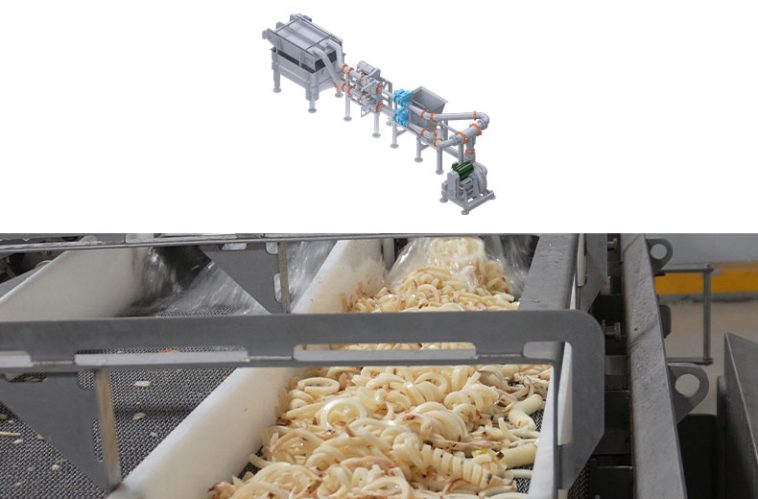

Transforming Food Processing Machinery: A Closer Look at the Vanmark Helix Hydrocutting System
The food processing industry is constantly reinventing itself with new technological advancements that help businesses produce more with less hassle. Vanmark’s latest innovation, the Helix Hydrocutting System, is a fresh take on producing curly fries—a high-demand product that requires precision, efficiency, and flexibility. As an observer from an industrial manufacturing perspective, it’s interesting to see how this system is setting a new benchmark by addressing the tricky parts and tangled issues that earlier mechanical cutters struggled with.
The system’s design revolves around twin cutting heads arranged in a stacked configuration that seamlessly improves the throughput while keeping the production area moderately sized. Developed by Vanmark—a company with a long history of industry leadership—this hydrocutting technology directs its focus toward solving many of the confusing bits of traditional mechanical processing equipment. By doing so, it is opening up new avenues for efficiency and yield increases in an increasingly competitive industrial landscape.
Innovative Equipment for High-Volume Curly Fry Production
The Helix Hydrocutting System is a revolutionary step forward for curly fry producers. It is not just a mechanical improvement; it represents a shift in how industrial food processors can achieve high volume production without sacrificing quality. By stacking up to 12 or more cutters, manufacturers can maximize production and consistently produce curly fries that meet market demands.
Let’s break down some of the system’s key technical features:
- Uses twin cutting heads in a compact, stacked design
- High-volume throughput of approximately 5,000 lbs/hr (2268 kg) per cutter
- Offers up to 92% sellable product yield
- Flexible configurations that scale production capability
- Integrated vision system for precision cutting
This advanced approach goes far beyond the traditional mechanical systems that many in the industry found intimidating or even off-putting due to their complicated pieces and routine maintenance headaches. The Helix Hydrocutting System promises a smoother operation with fewer confusing bits, enabling manufacturers to meet large orders with an ease that previously seemed nerve-racking.
Efficiency Gains and Increased Throughput Achieved
One of the standout benefits noted by industry experts is the remarkable throughput of the Helix system. With each cutter capable of processing 5,000 lbs/hr, industrial food processors can see a significant boost in production speed. This increase in throughput means that even when operating at high capacity, the system maintains a consistent level of performance, ensuring that the yield—the percentage of sellable product—remains high.
When you take a closer look at the production numbers, the potential becomes even clearer. Here is an illustrative table outlining the system’s key performance indicators:
| Key Feature | Description |
|---|---|
| Throughput per Cutter | 5,000 lbs/hr (2268 kg) |
| Sellable Product Yield | Up to 92% |
| System Configurations | Stackable from 2 to 12+ cutters |
| Maintenance | Toolless blade changeouts, annual rebuild service |
| Control System | Integrated central control with vision system |
These figures are not just impressive on paper—they speak volumes about the system’s potential to meet growing demand. In an era where every production minute can make a significant economic difference, increasing throughput and yield are key performance benchmarks that manufacturers can’t afford to ignore.
Smart Maintenance Strategies and an Ease-of-Maintenance Design
One of the more challenging aspects of industrial equipment has always involved maintenance. Traditional mechanical cutters often force operators to deal with nerve-racking and tangled issues during blade replacement and routine service. With the Helix Hydrocutting System, Vanmark has introduced a design that eases the maintenance process to a great extent.
Key benefits include:
- Toolless blade changeouts that significantly reduce downtime
- An annual rebuild service conducted by Vanmark technicians, ensuring system longevity
- Reduction of labor-intensive maintenance routines, thereby lowering overall operating costs
This focus on simplifying maintenance is a game changer. Rather than spending days figuring a path through complex service procedures, technicians and operators can focus on production enhancements and other critical tasks, steering through potential maintenance setbacks with a clear head. It is these subtle details and little twists that can have a huge impact on the bottom line for food processors.
Integrating Technology: Central Control Systems and Vision Integration
Modern production lines benefit immensely from the integration of advanced control systems. The Helix Hydrocutting System features a state-of-the-art central control system paired with an integrated vision system that together elevate the level of precision achievable during operations.
The central control system helps operators figure a path through the controls by simplifying settings and adjustments. This is particularly important in industries where even slight differences in product dimensions can have significant downstream effects. The vision system, on the other hand, ensures that every cut meets the rigorous standards laid out by food safety protocols and market quality benchmarks.
These enhancements include:
- Centralized control interface for swift system adjustments
- Real-time monitoring to catch and correct small product variations quickly
- Data logging capabilities for performance review and continuous improvement
Integrating these features within the Helix system is a clear demonstration of Vanmark’s commitment to not only producing a high-volume machine but one that is also smart and responsive. By helping operators manage their way through the intricate process of production, this system provides a competitive edge to those willing to invest in top-notch technology.
Industrial Manufacturing Trends: Automation and Equipment Scalability
Beyond the individual performance markers of the Helix Hydrocutting System, its introduction comes at a time when the industrial manufacturing landscape is ripe for change. Automation is becoming a key component of production efficiency, and Vanmark’s new system is well-aligned with this trend, offering both automation and scalability within a single package.
There are several elements to consider when talking about automation and scalability:
- Customization: The system’s flexible configurations allow manufacturers to tailor their setup efficiently—from a smaller, two-cutter system to robust plans featuring 12+ cutters.
- Automation Integration: With seamless digital control systems, the Helix is designed to integrate with existing automation processes at food manufacturing plants, ensuring that production lines are both efficient and adaptable.
- Future-Proofing: As automation continues to evolve, investing in equipment that can adapt to new software updates and operational demands becomes super important for staying competitive.
This approach can be seen as a case study in how manufacturers can work through the works of change by implementing innovations that enable both immediate and long-term benefits. Industry professionals are taking a closer look at the economic advantages of better equipment utilization, and the Helix system’s ease-of-use positions it as a prime candidate for those looking to enhance their operations without getting buried under a mountain of maintenance issues.
Economic Impact and Broader Industrial Perspectives
The ongoing shift in industrial food processing is not simply about individual equipment upgrades; it is also about creating a ripple effect that extends through economic policies and business tax laws. With increased automation and higher throughput comes the chance to more efficiently leverage capital investments and drive down energy consumption and overhead costs.
Some of the economic benefits include:
- Cost Savings on Labor: Less downtime for maintenance combined with easier repairs means reduced labor costs.
- Increased Production Efficiency: Higher throughput and better yield percentages translate to lower unit production costs, which can be particularly appealing when facing intense market competition.
- Asset Longevity: A design that allows for modular updates and simplified servicing can extend the working life of expensive production assets.
- Boosting Competitiveness: Companies that invest in smarter technology may find themselves better positioned when it comes time to navigate tricky parts of tax incentives or business regulation adjustments.
This integration of advanced hydrocutting technology into a traditionally labor-intensive process ultimately paves the way for not only greater production volumes but also a more balanced economic framework. As businesses grapple with the confusing bits of production costs, the clarity provided by efficient, automated systems can be a critical factor in steering through these turbulent economic waters.
Regulatory Challenges and Business Tax Considerations
In addition to the technical and economic benefits, any new industrial system must also be considered in light of regulatory frameworks and business tax laws. Governments are continually adjusting policies to encourage investment in technology that reduces waste, improves energy efficiency, and raises overall production safety standards.
Some regulatory and tax-related areas affected by these advancements include:
- Food Safety Regulations: Robust processing equipment that can maintain consistent quality helps businesses meet increasingly strict food safety codes.
- Environmental Regulations: Efficient systems that require less energy and produce higher sellable yields are often viewed favorably under environmental guidelines.
- Tax Incentives: Investment in cutting-edge, maintenance-friendly equipment can qualify businesses for tax breaks or credits under programs designed to foster innovation within the manufacturing sector.
By taking a closer look at these aspects, it is apparent that the Helix Hydrocutting System is not merely a piece of machinery—it is a comprehensive tool that helps manufacturers sort out the little details between operational success and financial viability. Regulatory and tax considerations often come with their own set of off-putting challenges, but innovations like these can help manufacturers find practical solutions that benefit both the bottom line and regulatory compliance.
Leader Perspectives: Industry Experts Weigh In
Several industrial manufacturing veterans appreciate Vanmark’s new system for its pragmatic approach. Rather than simply overhauling the cutting process in a way that creates more tangled issues, the Helix Hydrocutting System builds on a legacy of experience while incorporating fresh, effective solutions to today’s most pressing production challenges.
Industry experts point out that:
- Adopting technology that simplifies everyday tasks is a major step forward in industrial scaling initiatives.
- The reduction of manual intervention in the cutting process has the potential to lower error rates and decrease product waste.
- Smart integration of digital control systems helps companies figure a path through the maze of production data, enabling them to make better, quicker decisions on the factory floor.
- Cost-effectiveness paired with innovative engineering can drive future investments, pushing food manufacturing toward an era of even greater automation.
This feedback is important because it underscores that while technological advancements often come with intimidating challenges, the Helix system manages to address not only the fine points of production efficiency but also the hidden complexities of maintenance, control, and scalability. It is a testament to how the industry can work through the twists and turns of innovation by basing new developments on real-world operational needs.
Future Perspectives: Adapting to a Changing Food Manufacturing Landscape
The success of technologies like the Helix Hydrocutting System is also a signal that the future of food manufacturing may well be defined by adaptability and smart design choices. As automation continues to reshape production lines across various sectors, the industrial world is beginning to see the economic and operational benefits of more flexible, high-volume equipment solutions.
Looking forward, several trends appear to be converging:
- Enhanced Automation: Future systems will likely feature even tighter integration between hardware and digital monitoring, allowing for real-time adjustments that optimize both efficiency and quality.
- Focus on Maintenance Efficiency: As companies increasingly adopt equipment designed for easy servicing, the overall downtime caused by routine repairs is expected to decline sharply.
- Scalable Production Modules: Being able to add or reduce system components as needed, without having to reconfigure the entire production line, is becoming a must-have in a dynamic manufacturing environment.
- Environmental Considerations: With rising concerns about sustainability and changing energy regulations, innovations that reduce waste and energy consumption will find favor not only with businesses but also with policymakers.
By taking a deep dive into these areas, it becomes clear that the Helix Hydrocutting System is more than just a tool for producing curly fries—it is a harbinger of a broader industrial shift. This innovation allows companies to focus on what truly matters: efficient operations that are smart enough to adapt to today’s dynamic economic and regulatory landscapes.
The Role of Advanced Machinery in Reshaping Production Economics
Industrial manufacturers are always looking for equipment that can combine high throughput with manageable maintenance schedules. The key to the Helix Hydrocutting System’s appeal lies in its ability to resolve the common pitfalls of older systems. Whether it’s the tricky parts of manual adjustments, or the tangled issues of frequent mechanical repairs, this system is built to lower the barrier to high-volume, high-quality production.
Some of the critical economic factors include:
- Capital Efficiency: Upfront investments in advanced machinery like this often pay off by reducing long-term operational expenses.
- Improved Return on Investment: The high throughput and low downtime improve the overall return on capital equipment, making it a super important asset for competitive businesses.
- Lower Operational Risk: With fewer manual interventions required, there is less room for error—a benefit that can have notable effects on both product quality and staff safety.
In light of these benefits, it is understandable why industry leaders are increasingly supportive of technological upgrades that not only focus on the immediate gains of productivity but also anticipate the need to manage your way through future economic challenges.
Conclusion: A Step Toward the Future of Food Processing
The introduction of the Vanmark Helix Hydrocutting System represents an exciting evolution in the field of industrial food processing. Its design addresses a swarm of challenges—from managing high-volume production to offering maintenance-friendly features that help sidestep nerve-wracking downtime. As we witness the convergence of advanced digital controls, automation, and flexible system configurations, it is evident that this new approach could redefine what it means to keep pace in a fast-evolving industry.
For food processors and industrial manufacturers alike, the ability to figure a path through the intricate production environment is crucial. By combining high throughput, maintenance ease, and smart automation, the Helix system is not only an investment in equipment but a strategic move designed to bolster competitiveness and efficiency in a marketplace where every minute counts.
As companies continue to face new regulatory challenges, economic pressures, and the continuous push for higher efficiency, embracing innovations like the Helix Hydrocutting System could be considered a critical, forward-thinking strategy. It simplifies many of the complicated pieces traditionally associated with high-volume production, allowing businesses to focus on what really drives the bottom line—quality, efficiency, and scalability.
In the grander scheme of food manufacturing, the introduction of such innovative solutions paves the way for a more agile, resilient, and productive industry. While each technological advancement comes with its own set of small distinctions and fine shades that must be understood and managed, the overall impact is clear: companies that invest in smart, effective machinery are preparing themselves for a future where precision and efficiency go hand in hand with economic success.
Ultimately, the Helix Hydrocutting System is more than just another piece of industrial equipment. It symbolizes the continued drive toward operational excellence and the kind of innovation needed on a global scale, particularly in an industry where meeting consumer demand can be a nerve-wracking and overwhelming challenge. With this system, Vanmark is not only setting a new industry standard but also leading the way for other manufacturers to take a closer look at their production processes, figure a path through the maze of modern manufacturing challenges, and ultimately deliver products that are consistent, high quality, and economically viable for years to come.
Originally Post From https://www.foodengineeringmag.com/articles/103281-vanmark-debuts-helix-hydrocutting-system-for-curly-fries
Read more about this topic at
Revolutionizing Potato Processing with Data-Driven Precision
The Power of Pulsed Electric Field (PEF) Technology