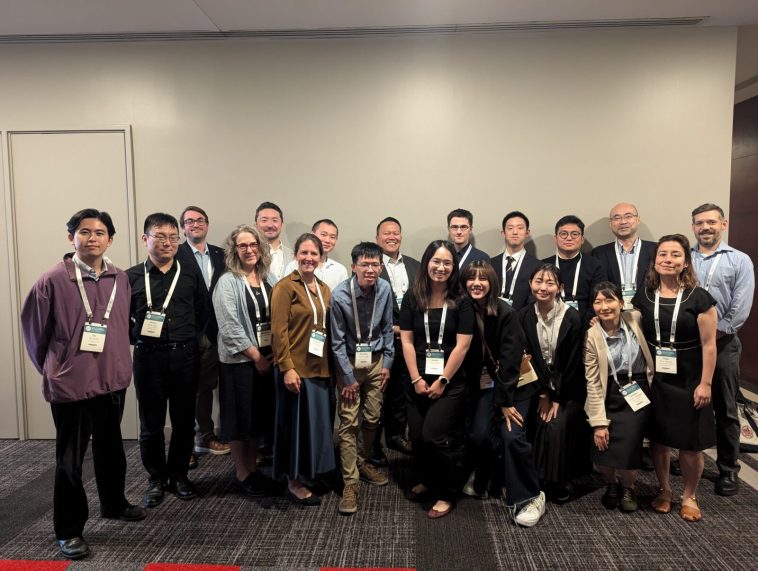

Reflecting on Civically-Engaged Research in Today’s Political Landscape
The recent APSA 2025 Annual Meeting in Vancouver has sparked lively debate and renewed interest in community-centered approaches to research. Over 5,000 political scientists, along with hundreds more participating online, gathered to share ideas and innovations. For many observers, this meeting wasn’t merely an academic exercise—it was a call to reframe how we think about civic engagement, research, and the role of communities in shaping political discourse.
At its core, the meeting sought to underline how civically engaged research (CER) has evolved into a transformative approach in political science. More than just academic jargon, CER offers tangible ways to collaborate with communities while also addressing some of the most intimidating challenges of our time. In this context, the meeting provided a platform to dig into the tangled issues and practical challenges that come with producing research aimed at making a real difference in local and global societies.
Integrating Community-Centered Approaches: A New Perspective for Research
One of the highlights of the meeting was the vibrant discussion around the benefits and hurdles of community-centered research. Scholars from across the globe emphasized that working closely with communities is not just about collecting data—it’s about building trust, acknowledging the human element behind statistics, and ensuring that research truly captures the lived experiences of people. This shift has been seen as a critical move for political research in a world that is increasingly interconnected yet loaded with issues such as political polarization.
Participants were quick to point out that this work is riddled with tension, from ethical collaboration to maintaining equal partnerships. There is a delicate balance when staying true to scientific methods while also allowing space for these human interactions to flourish. Some of the little details researchers have to grapple with include:
- Defining clear ethical guidelines for community involvement
- Addressing power dynamics among research partners
- Overcoming logistical challenges in community outreach
- Managing feedback loops between academia and local stakeholders
These points illustrate that while the mission may be straightforward, the process often requires getting into some of the fine points of planning and implementation. For those who have been deeply involved with CER, the outcome is usually a research product that is both academically robust and socially impactful.
Breaking Down the Challenging Parts: Tackling the Tricky Bits of CER
For many in the field, the practical aspects of implementing CER can be both intimidating and overwhelming. However, as the discussions at the meeting demonstrated, there are workable strategies for overcoming these nerve-racking challenges. The roundtable discussions were particularly effective in showing how scholars, whether from academia or community institutions, can find their way through the twists and turns of this research approach.
The panel discussion moderated by ICER Fellow Stephanie Chan exemplified the willingness of researchers to poke around in the confusing bits that often accompany community-academic partnerships. Panelists from diverse backgrounds, including Ngoc Phan and Christina Sciabarra, offered insights on how to figure a path when partnering with marginalized communities—each sharing stories of both success and setbacks. Their experiences highlighted that, while the process is full of problems, it is also immensely rewarding.
Some of the key strategies discussed include:
- Engaging early with community leaders to build trust
- Developing practical frameworks for ethical collaboration
- Ensuring transparency in research methodology and data-sharing
- Utilizing flexible approaches that can adapt to local needs
These tactics serve as useful guideposts for those embarking on civically engaged research projects, emphasizing that every nuanced detail—from data collection methods to community feedback—matters significantly.
Learning from the Experts: Insights from the ICER and JPSA/APSA Alumni
The meeting also featured a series of candid reflections from alumni affiliated with the Institute of Civically Engaged Research (ICER) and the JPSA/APSA Working Group. Through a series of roundtable discussions, these experienced researchers offered a candid look into what it takes to conduct research that truly serves the community. Their narratives were replete with accounts of both risk and reward, showing that while the path is certainly loaded with issues, there are considerable benefits to be reaped when research is both participatory and grounded in the real world.
For those who are just starting to figure a path in this arena, these shared experiences shine a light on the small distinctions that separate effective CER from more traditional, detached academic work. Some of the key elements that came to light include:
- A need for continuous dialogue between researchers and community members
- Emphasis on building long-term partnerships rather than one-off engagements
- A commitment to addressing both immediate community issues and larger systemic challenges
- A spirit of experimentation that allows for learning from missteps
These insights reaffirm that civically engaged research is not simply a research method—it’s a continuous learning process that adapts as both the academic and community landscapes evolve.
Addressing the Tangled Issues in Civic Research Methodologies
The discussions during the meeting also brought attention to the tangled issues that often arise in the methodological aspects of CER. Traditional academic research, with its strict protocols and controlled environments, can sometimes be a poor fit for studies that are conducted in the wild, messy world of real-life community issues. Instead, the contemporary approach to CER calls for flexibility and creativity.
Researchers must often steer through a host of complicated pieces—from accounting for local variations in data to addressing unforeseen political events that could influence the research outcomes. The meeting made it clear that if scholars wish to produce work that resonates on both an academic and practical level, they must be willing to divert from strictly controlled methods and instead embrace methodologies that are as adaptive as the communities they study.
Some of these strategies include:
- Using mixed methods to capture both quantitative and qualitative insights
- Incorporating real-time community feedback to adjust research parameters
- Employing participatory approaches that allow community members to become co-researchers
- Creating more adaptive evaluation frameworks that reflect local contexts
By adopting these strategies, researchers can produce studies that better reflect the localized, nuanced realities of the communities they study, ensuring that research outputs are both academically credible and practically relevant.
Critical Considerations in Collaborating with Marginalized Communities
One of the most compelling themes that emerged during discussions was the need to work effectively with marginalized communities. The table below provides a snapshot of some of the principal benefits and the associated challenges when engaging these groups in research efforts:
| Key Benefit | Associated Challenge |
|---|---|
| Enhanced trust and community buy-in | Nerve-racking issues related to building genuine relationships |
| Rich, context-specific insights | Tangled issues in ensuring ethical data collection |
| Empowerment of local voices | Complicated pieces of managing diverse expectations |
Working with marginalized communities naturally involves a spectrum of challenges. For instance, researchers must ensure that the communities’ voices are heard without inadvertently reinforcing existing power imbalances. The process requires a careful balance of assertiveness and humility—a balance that often rests on the researchers’ ability to manage their own preconceptions and biases while remaining open to new perspectives.
To further illustrate these issues, consider the following bullet points highlighting important aspects of collaboration:
- Building long-term trust rather than engaging in temporary or superficial interactions
- Investing time in understanding the community’s cultural, historical, and social context
- Ensuring that research outcomes directly benefit the community
- Maintaining open channels of communication to continuously refine research approaches
Ultimately, these considerations underscore that while the work might feel overwhelming at times, the rewards—in terms of producing socially impactful research—are well worth the effort.
Steering Through Ethical Dilemmas and Power Dynamics
Ethical considerations continue to play a key role in shaping the future of civically engaged research. The discussions at the annual meeting revealed that ethical dilemmas, far from being off-putting obstacles, offer researchers a chance to improve their methods and the overall impact of their work. The challenges are not just theoretical; they are very real and pertain to the little twists associated with balancing the interests of academic rigor and community empowerment.
One speaker explained how researchers can find their way through these dilemmas by establishing robust ethical frameworks that prioritize transparency and mutual respect. For instance, in a community-based study, both academic and community partners must work together to define what ethical collaboration looks like. This includes sharing decision-making power, making research processes as transparent as possible, and clarifying who benefits from the research outcomes.
The following list outlines some strategies for managing these ethical dilemmas:
- Co-developing ethical guidelines with community members
- Offering training sessions on ethical practices for researchers and community partners
- Implementing regular feedback mechanisms to ensure that all parties are heard
- Documenting any ethical challenges and developing plans to address them
By focusing on these key strategies, researchers can create a more balanced and respectful research environment. This approach not only minimizes the risk of ethical pitfalls but also enhances the overall credibility and applicability of the research.
Expanding the Impact: How CER Can Address Broader Political Shifts
Civically engaged research is not an isolated academic activity; it has the potential to influence broader political and social dynamics in significant ways. As political institutions and societal structures continue to undergo rapid changes, research that is rooted in community involvement has become more essential than ever. By integrating community perspectives, CER projects can offer insights that traditional methods might miss, particularly when it comes to understanding local responses to national and global challenges.
One of the session highlights was the discussion around how CER methodologies can be employed to address issues like political polarization, civic disengagement, and even the shifts brought about by changing demographic patterns. For instance, as societies become more diverse and dynamic, the methods used to study them must also evolve, embracing more flexible and adaptive strategies.
Here are a few ways civically engaged research can contribute to addressing larger political and societal issues:
- Improved policy development: By incorporating community input, research findings can lead to better-informed policymaking.
- Greater social cohesion: CER helps build bridges between communities and policymakers, fostering increased trust and engagement.
- Enhanced accountability: With community members actively involved, research outcomes can serve as a tool to hold public institutions accountable.
- Responsive governance: CER provides a granular understanding of local dynamics, enabling more responsive and tailored public services.
These points, while drawn from discussions at a political science conference, have implications well beyond academia. For small business owners, policymakers, and even leaders in sectors like industrial manufacturing and electric vehicles, an understanding of civic engagement techniques can inform better decision-making processes, ensuring that economic and social policies are grounded in real-world experiences.
Bridging the Gap Between Academia and Applied Research
One fresh insight emerging from the meeting is the importance of blending rigorous academic research with practical, community-level insights. This bridge between theory and real-world application is critical for ensuring that the profound insights gathered through CER not only contribute to academic debates but also translate to effective policies and business practices.
In practice, bridging this gap involves several steps. First, it calls for the development of research methodologies that are inherently flexible—able to adjust to unexpected community challenges while still upholding a high standard of academic quality. Second, it requires a mindset shift among researchers, from viewing communities merely as subjects of study to recognizing them as active partners in the research process.
Some useful strategies include:
- Creating interdisciplinary teams that combine academic expertise with practical experience
- Establishing partnerships with local organizations for ongoing feedback and collaboration
- Developing training programs that help scholars understand the practical applications of their research findings
- Promoting knowledge exchange sessions where community leaders share their on-the-ground perspectives with academic researchers
This approach not only fosters more effective collaborations but also leads to research outcomes that are more actionable and directly applicable to solving real-life problems. For instance, innovations in electric vehicle manufacturing or business tax strategies require insights into local needs and behaviors—a need that CER is uniquely positioned to fulfill.
The Role of Academic Conferences in Shaping Future Research Directions
Conferences like the APSA Annual Meeting offer more than just a forum for academic discussion—they are incubators for new ideas, strategies, and collaborations. The face-to-face interactions, coupled with vibrant online discussions, create an environment where researchers from various fields, including political science, small business, industrial manufacturing, and even automotive sectors, can exchange ideas and learn from one another.
The networking opportunities provided during events such as the CER Reception have proven especially valuable. These informal gatherings enabled attendees to celebrate shared accomplishments and brainstorm strategies for future research collaborations. As one participant noted, having a space to sort through the interference of challenging projects, get into the nuances of data interpretation, and share practical tips with peers is super important for driving research innovation forward.
Moreover, the experience underscored that academic conferences, despite sometimes appearing nerve-racking due to the sheer number of participants and topics, offer a unique ecosystem for growth. They help researchers navigate the twists and turns of academic and practical research alike, ensuring that more grounded, relevant perspectives are incorporated into future projects.
Future Directions: Integrating CER with Broader Political and Economic Goals
Looking ahead, the approach of civically engaged research is poised to influence not only the realm of political science but also broader socio-economic policy. In a time when economic drivers, technological revolutions, and shifting political alliances are increasingly interwoven, there is a growing acknowledgment that isolated academic endeavors are insufficient.
To truly create change, research must cross traditional boundaries. This means integrating the insights of CER with vital aspects of economic policy, industrial strategy, and business innovation. For instance, consider how electric vehicle companies are now looking at community feedback to tailor products that better suit local market needs, or how small business owners use community engagement to shape more effective tax strategies. Such interactions between research and practice underscore the expansive potential of CER.
Key areas where this integration can lead to substantial improvements include:
- Economic Resilience: Communities that are actively involved in shaping policies tend to develop more robust economic strategies, whether through local entrepreneurship or targeted industrial initiatives.
- Innovative Manufacturing Strategies: For sectors like industrial manufacturing, community-led research can unlock insights into emerging trends, helping companies adapt and thrive amid global shifts.
- Sustainable Business Practices: By understanding local consumer behaviors, businesses can better align their operations with the social and economic needs of the communities they serve.
- Informed Policy Reforms: With more comprehensive, community-grounded data, policymakers can formulate responses that are both effective and contextually appropriate for different regions.
The ongoing dialogue between academic research and practical application is essential for stimulating progress in various sectors. As such, CER represents a crucial tool not just for political scientists but for all stakeholders who are invested in building a more inclusive and responsive society.
Conclusion: The Enduring Relevance of Civically Engaged Research
The APSA Annual Meeting in Vancouver has reinforced that civically engaged research is far more than a passing trend—it is an enduring paradigm that promises to reshape the landscape of academic inquiry and practical policy-making. By embracing community-centered methods, researchers are better equipped to tackle the tricky parts of working in increasingly complex and unpredictable environments.
In a world that is continuously transformed by rapid technological advances, shifting political alliances, and evolving economic patterns, the need for research that is both adaptable and deeply rooted in the community has never been more apparent. The experiences shared at the conference, from the challenging, nerve-racking ethical dilemmas to the inspiring stories of effective collaboration with marginalized communities, serve as a testament to the power of CER.
To sum up, the 2025 APSA Annual Meeting has offered a model for integrating academic rigor with community input. This model not only enriches the field of political science but also has profound implications for broader societal challenges. For policymakers, small business owners, leaders in industrial manufacturing, and innovators in sectors like automotive and electric vehicles, the lessons learned from CER can offer new ways to understand and solve some of the most intimidating problems of our time.
By taking a closer look at community centered research methodologies and prioritizing ethical, transparent partnerships, we can create research that truly matters. Furthermore, by applying these insights across different fields—from shaping business tax laws to driving economic growth—CER stands as a beacon for collaboration that bridges the gap between theory and practice.
In this era of rapid change and perpetual flux, the onus is on both academic and practical sectors to find innovative ways to work together. The journey may be loaded with tricky bits and complicated pieces, but the rewards of creating meaningful, community-focused research are simply too significant to ignore. As we move forward, let us continue to champion the importance of civically engaged research—a collaborative, adaptive, and ultimately transformative tool that has the potential to redefine our approach to both research and policy-making.
Looking to the future, it is clear that the lessons from the APSA meeting must inform not only the next generation of political research but also the applied frameworks in industries that shape our everyday lives. Whether addressing economic resilience, innovative manufacturing strategies, or fostering sustainable business practices, the integration of community voices into research will remain a cornerstone of progress.
Ultimately, what the APSA 2025 Annual Meeting has shown is that when researchers, policymakers, and communities work together, the resulting synergy is more than the sum of its parts. For those ready to figure a path through the various twists and turns of modern academia and industry, civically engaged research offers a proven strategy to address both local challenges and global transformations. This collaborative spirit—driven by a commitment to ethical, transparent, and community-informed practices—holds the promise of creating a more informed, resilient, and inclusive future.
Originally Post From https://politicalsciencenow.com/reflections-on-civically-engaged-research-at-the-apsa-2025-annual-meeting-in-vancouver/
Read more about this topic at
Ehrlich Award
Civically Engaged Scholars (CES)